


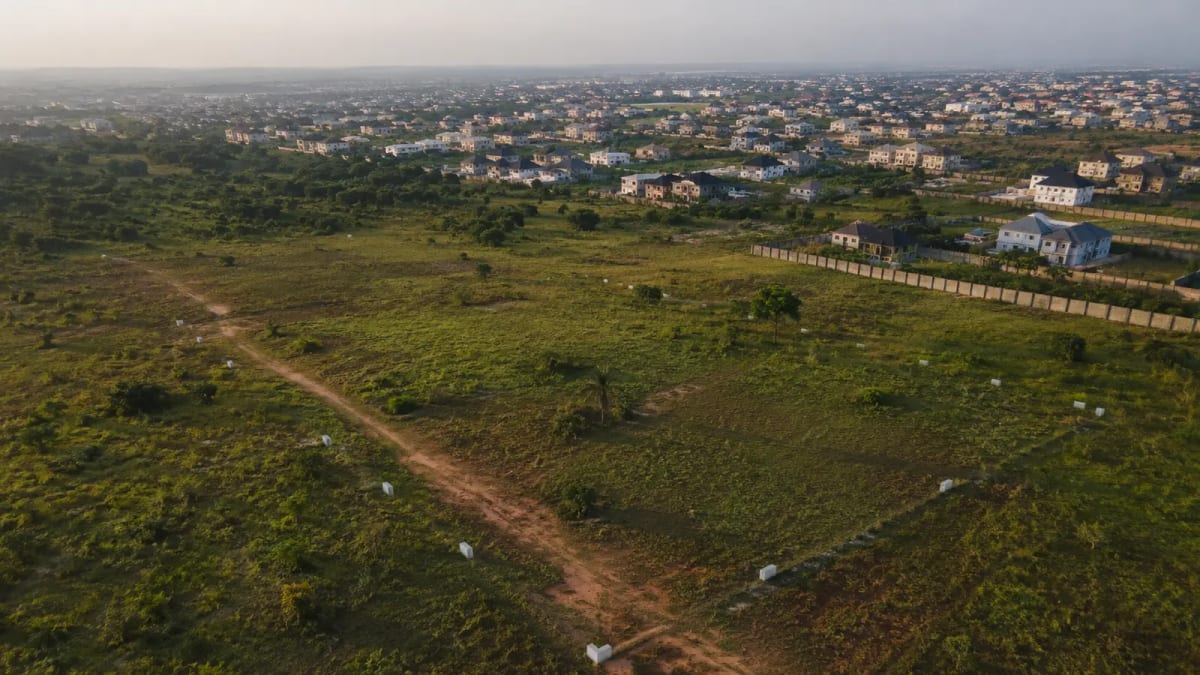
Land banking means acquiring undeveloped or underdeveloped land and holding it in expectation of future value growth. In Nigeria it is heavily marketed around expanding cities, new roads, industrial corridors and future development. The idea is simple. The execution is not.
This guide explains how land banking creates value, the main risks, how to evaluate an opportunity and how it compares with other real-estate routes.
This article is educational and not legal or investment advice.
Key takeaways
- Land gains value when real demand for a location grows, not because a brochure promises it.
- Title risk is the biggest threat: verify before paying.
- Undeveloped land usually earns no income while you hold it, and can take a long time to sell.
- Include holding costs and a realistic time horizon in your numbers.
- Treat promised returns as claims to be tested, not guarantees.
How land banking creates value
Land does not appreciate because a brochure says it will. Value can rise when more people or businesses are willing and able to use a location. Drivers may include population growth, access, employment centres, infrastructure, planning changes and nearby commercial development.
A strong thesis identifies who will want the land later and why. For example: “A new road now connects this area to an employment centre, so families and businesses will need plots here within five to ten years.” A weak thesis is: “Land in Nigeria always goes up.”
Types of land banking opportunities
- Direct plot purchase: you buy and hold a specific plot in your own name.
- Estate plots from developers: you buy a plot in a planned estate, often with instalment plans and promised infrastructure.
- Pooled or syndicated schemes: a promoter pools investor funds to buy a larger parcel. These require extra scrutiny of who holds title, how your share is documented and whether the scheme is regulated.
- Farmland: agricultural land held for appreciation, potentially producing income if farmed or leased in the meantime.
Risk 1: defective or disputed title
No appreciation forecast can rescue land you cannot safely establish or transfer. Nigeria’s Land Use Act makes the framework around rights of occupancy and transfers central to the investment. Verify the seller, chain of title, survey and registry position independently using our land due diligence checklist. Check, in particular, whether the land falls under any government acquisition or road alignment.
Risk 2: buying a story instead of a location
“Five minutes from the proposed airport” is a marketing claim until verified. Confirm the project, route, stage and actual distance. Ask whether the investment still works if promised infrastructure is significantly delayed. Large projects can transform an area, but prices often rise on announcements long before completion, so check whether today’s price already reflects the story.
Risk 3: poor exit liquidity
Land can be valuable and still take a long time to sell. Do not assume a buyer appears on the exact date you want to exit. Research genuine comparable transactions and the depth of local demand. Ask local agents how long similar plots take to sell and at what discount to asking price.
Risk 4: hidden obligations and holding costs
Estate levies, documentation costs, fencing requirements, infrastructure charges or development timelines may alter total return. Get material obligations in writing. Also budget for:
- Perfecting title (consent, registration, stamping).
- Fencing, clearing and periodic site checks to deter encroachment.
- Ground rent or annual property charges where applicable.
- Developer covenants that require you to build within a set period.
Risk 5: encroachment and land grabbing
Vacant land is vulnerable to encroachment and competing claims. Visible possession helps: survey beacons, fencing where appropriate, signage and regular visits by someone you trust. Keep originals of your documents safe and copies elsewhere.
Risk 6: unrealistic return promises
A projection is not a guarantee. If a promoter says land will double within a fixed period, ask for the mechanism, comparable completed transactions and assumptions. Model conservative scenarios yourself. Be especially wary of schemes offering fixed “returns” on land, which can resemble investment contracts and may require regulatory approval.
How to evaluate an opportunity
- Verify legal title before payment.
- Confirm the survey and physical site.
- Identify genuine demand drivers.
- Check competing supply in the area.
- Estimate complete acquisition and holding costs.
- Model optimistic, base and downside exits.
- Set a realistic time horizon and liquidity reserve.
A simple return check
Add up the purchase price, all transaction costs and expected holding costs over your planned period. Then estimate a conservative sale price based on real comparable sales, minus selling costs. If the resulting gain is small after allowing for inflation and the time your money is tied up, the opportunity may not justify the risk.
Land banking versus rental property
Rental property can produce cash flow during the holding period, while undeveloped land usually does not. Land may have fewer maintenance demands while buildings require active management. The correct choice depends on whether you prioritize current income, appreciation, liquidity or operational simplicity. Our beginner’s guide to Nigerian real estate compares the main routes.
Can farmland work as a land bank?
Farmland near growing towns can combine appreciation potential with interim income from farming or leasing to farmers. It also brings operating risks: security, labour, water and buyers for produce. If you plan to farm rather than simply hold, read our guide to starting a farm first.
Frequently asked questions
Is land banking profitable in Nigeria?
It can be, where title is sound, the price is reasonable and genuine demand grows. It can also lose money through bad title, overpaying for hype or being unable to sell.
How long should I hold land?
Base it on the demand driver. If the thesis depends on a road or industrial project, your horizon must allow for delays.
Are land banking schemes regulated?
Buying a plot directly is a property transaction. Pooled schemes promising returns to investors may fall under securities regulation. Check with the Securities and Exchange Commission before investing in any pooled scheme.
Bottom line
Treat land banking as an underwriting problem, not a faith-based bet on urban expansion. Buy only when title, price, demand drivers, holding period and exit logic make sense together. This article is educational and not legal or investment advice.
Related reading: what a C of O really means, how to invest in Nigerian real estate and REITs in Nigeria. Planning to farm the land instead of holding it? See our farm startup cost guide.